|
|
|
|
Hurricane Milton Throughout the early morning hours of Thursday, Oct. 10, Hurricane Milton hit Daytona Beach with wind gusts of 83 mph and more than 15 inches of rain at the Bethune Point Wastewater Treatment Plant. The city experienced freshwater flash flooding, which overwhelmed the city’s stormwater system. The freshwater flooding was further enhanced by high tide in the river and storm surge, which caused saltwater flooding east of Ridgewood Avenue. Residents faced downed trees and extended power outages. Low-lying areas of the city saw significant flooding of streets, homes and vehicles. Before the storm, a countywide evacuation order was issued for residents east of Ridgewood Avenue/US 1 in Daytona Beach, east of the Intracoastal waterway, living in manufactured and mobile homes, low-lying areas and other areas prone to flooding as well as campsites and RV recreational parks. Public Works distributed 50,000 sandbags over a three-day period before the storm. Police Department personnel worked throughout the storm to respond to 1,055 calls for service during and after the storm and rescued hundreds of people with their high-water vehicles. Firefighters responded to 800 calls and assisted with rescues from flooded areas and high-rise buildings. Parks & Recreation staff opened the Cherry Community Center on George W. Engram Boulevard during the storm and the center served as a temporary shelter for about 50 evacuees. Utilities crews worked prior to the storm to clean storm inlets and stormwater lines, pump down retention areas and place temporary pumps in strategic locations. During the storm, employees worked around the clock to keep water, sewer and stormwater systems operational. |
|
|
|
|
|
|
|
Residents can apply for federal disaster assistance for losses resulting from Hurricane Milton through the Federal Emergency Management Agency (FEMA). If you have insurance, you are required to file a claim with your insurance company first. If you don’t have insurance or insurance does not cover your claim, you can begin applying for FEMA assistance. Types of assistance available - Money for temporary housing while you are unable to live in your home, such as rental assistance or reimbursement for hotel costs.
- Money to support repairing or replacing owner-occupied homes that serve as the household’s primary residence, including privately owned access routes, such as driveways, roads or bridges.
- A temporary housing unit, if approved for the disaster, when you are not able to use rental assistance due to a lack of available housing resources.
- Money for hazard mitigation assistance to help eligible homeowners repair or rebuild stronger, more durable homes.
- Money for other uninsured or underinsured disaster-caused expenses and serious needs.
- Up to $300 in one-time financial assistance to help clean and sanitize primary residences.
- For critical needs, FEMA’s Serious Needs Assistance can provide an initial payment of up to $770 to cover food, medication, water and other essentials.
How to apply - Online at DisasterAssistance.gov.
- On the FEMA Mobile App.
- By calling 800-621-FEMA (3362). The toll-free number is open from 7 a.m. to 11 p.m., seven days a week.
When applying, you’ll need the following information - Contact Information (telephone number, mailing address, Social Security number).
- Address of damaged home or apartment.
- Description of damage/lost items.
- Photos of your damaged home and belongings.
- Information about insurance coverage.
- Bank account and routing numbers for direct deposit of funds.
|
|
|
|
|
|
|
|
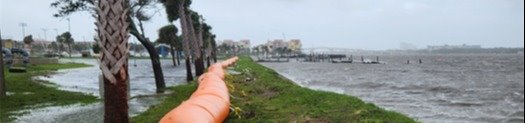
Tiger Dam Deployed For the first time, the city deployed a Tiger Dam, a water-filled inflatable barrier, to hold back floodwaters from its Bethune Point Wastewater Treatment Plant along the Halifax River. The Florida Division of Emergency Management provided the Tiger Dam, as well as 10 generators and four bypass pumps. This collaboration was made possible after new Emergency Manager Aaron Spencer requested aid through Volusia County’s Emergency Management to state officials. The dam worked to prevent rising river levels from entering the treatment plant. The state began installing these flood control devices around critical infrastructure during Hurricane Helene. Governor Ron DeSantis said the dams worked everywhere they were installed. An individual 18-inch high Tiger Dam weighs 50 pounds in a dry state, but when water fills up the bladder technology, it weighs 6,300 pounds and is the equivalent of 500 sandbags, according to U.S. Flood Control, the manufacturer of Tiger Dams. |
|
|
|
|
|
|
|
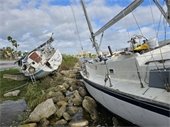
Boats removed from River The Permits & Licensing division surveyed the Halifax River following Hurricane Milton looking for unmoored and damaged boats. They identified six damaged vessels that washed ashore. The boats have been secured at the marina, and the process of notifying the boats’ owners has begun. |
|
|
|
|
|
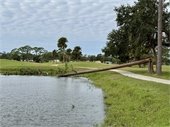
Golf course sustains damage With over 125 trees down and the front nine of both courses flooded, the Daytona Beach Golf Club is currently closed to the public. The golf course will be partially open Monday, Oct. 21 and the proshop will be open from 10 a.m. to 4 p.m. Monday through Saturday to answer any questions. For more information, call (386) 671-3500. |
|
|
|
|
|
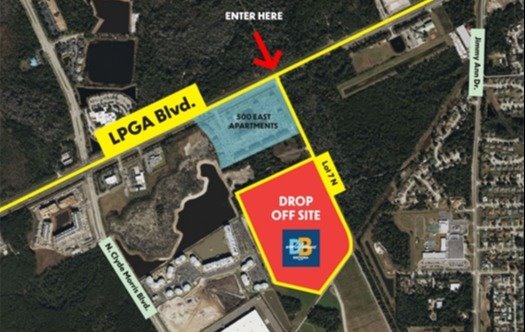
Storm Debris Drop-Off Site Beginning Saturday, Oct. 19, the City of Daytona Beach will open a drop-off site for residents who want to self-haul yard waste at no charge instead of waiting for curbside pickup. Only non-commercial yard waste, including leaves, branches and other natural debris, can be dropped off at Lot 7, near the corner of LPGA Blvd. and N. Clyde Morris Blvd. Residents must enter from LPGA Boulevard. The site will be open from 8 a.m. to 6 p.m., seven days a week. Only loose vegetative debris—no bags or containers—will be accepted. Appliances, construction materials and furniture will not be accepted. Contractors, lawn care or commercial companies are prohibited from using this site. Upon arrival, residents must present proof of residency. If a resident has a third party haul their debris to the drop-off site, the resident must sign a form stating: - Their name and the property’s address
- generated debris is from Hurricane Milton
- a contractor was not paid a disposal fee
- they won’t make a claim to their insurance company for the cost of storm-debris management.
The signed form will be presented to the site attendant. The form has be found at www.DaytonaBeach.gov/StormDebris. |
|
|
|
|
|
|
|
After Florida’s back-to-back Hurricanes Helene and Milton, qualified contractors are in high demand across the state. Unfortunately, disasters attract scam artists who want to exploit the situation. The City of Daytona Beach’s Permits & Licensing division wants to remind residents to be aware of unscrupulous, unqualified workers. If you have been approached to have work done, check if the individual is licensed through the Department of Business and Professional Regulation (DBPR) by visiting myfloridalicense.com. If your property is damaged from the storm, the Florida Attorney General’s Office offers these tips when hiring a contractor: - Insurance evaluation - Ensure repair work will be covered under your insurance policy. Have an insurance company evaluate the damage before arranging repairs.
- Get written estimates – Obtain at least three written, itemized estimates on bids or repairs.
- Bogus offers - Watch out for unsolicited offers or contractors claiming to perform repairs at a discount with leftover supplies from another job.
- Check references – To check a company’s reputation, look for references online or ask a friend. Also, check to see if a company is properly licensed and insured and if any consumer complaints are filed against a licensed contractor at the Florida Department of Business & Professional Regulation or by calling the Florida Attorney General’s Office at (866) 9NO-SCAM.
- Bonded - Make sure a contractor is bonded and verified with a bonding agency.
- Read the fine print - Although it may be daunting, read the entire contract before signing to ensure it includes the required buyer’s right to cancel language and understand any penalties that may be imposed for cancellation.
- Liens - Insist on releases of any liens that could be placed on the property from all subcontractors prior to making final payments. Homeowners may unknowingly have liens placed against their properties by suppliers or subcontractors whom the contractor has not paid. The liens will remain on the title if the contractor fails to pay them.
- Deposits and final payment - Never pay the full amount of a repair expense upfront, and be wary before providing large deposits. Do not sign a certificate of completion or make final payment until you are satisfied with the work performed.
Florida’s Disaster Contractors Network (DCN) has also been activated to support homeowners needing help with emergency home repairs. DCN is a free resource founded by the DBPR designed to connect homeowners with licensed contractors and suppliers to perform emergency repairs. How it works: Once homeowners have identified their repair needs, they can visit DCNOnline.org and search by county for a list of Florida-licensed contractors in their local community who offer these services. |
|
|
|
|
|
|
|
|
|
|
|
|
|
|
|
|
|
|
|










 Share on Facebook
 Share on Twitter
 Share via Email
