celebrate our history
Celebrate 150 Years, One Decade at a Time
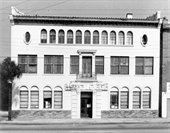
Join us in celebrating Daytona Beach’s 150th birthday this year. Our history is marked by generations of milestones that helped shape the community we know today. Below is a quick decade-by-decade snapshot of some of the people, places and moments that defined our city’s story.
Daytona Beach was founded in 1870 and officially incorporated on July 26, 1876. Early development centered along the Halifax River, with Pinewood Cemetery (1870) standing as one of the city’s oldest historic landmarks.
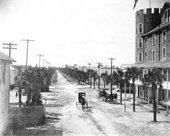
The late 19th and early 20th centuries brought transportation and civic growth. The city’s first railway depot opened in 1887 at what is now Orange Avenue and Beach Street. The Halifax River Yacht Club, established in 1896, is believed to be the oldest yacht club on the Eastern Seaboard still on its original site.
Daytona Beach gained international attention in 1904 when land speed record attempts began on the hard-packed sands. That same year, educator and civil rights leader Mary McLeod Bethune founded the Daytona Normal and Industrial Institute for Girls, which later became Bethune-Cookman University. City Island Ballpark opened in 1914, adding to the city’s recreational life.
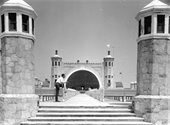
The 1920s brought national recognition. Promotional efforts popularized the nickname “The World’s Most Famous Beach,” and landmarks such as the Daytona Beach Pier, Peabody Auditorium and the municipal golf course took shape. In 1926, Daytona, Daytona Beach and Seabreeze consolidated to form the modern city.
In the 1930s, Cypress Park opened as a gathering place for the Black community, the Coquina Clock Tower was built (1936–38), and the Daytona Beach Bandshell opened in 1937. That decade also included the first Daytona 200 motorcycle race, the origin of Bike Week. Land speed racing on the beach brought record speeds in 1935 when Sir Malcolm Campbell set a record of 276.82 mph.
Midcentury milestones include Jackie Robinson’s integrated spring training game at City Island Ballpark in 1946 and the founding of NASCAR in Daytona Beach in December 1947 (incorporated February 1948). Daytona International Speedway was completed in 1958 and hosted its first Daytona 500 in 1959.
Postwar growth included the founding of Daytona Beach Junior College (now Daytona State College) in 1957 and Embry-Riddle Aeronautical University moving their operations from Miami to Daytona Beach in 1965. Leaders such as Howard Thurman and Jimmy Huger, the first Black city commissioner in modern times, shaped the civic landscape. A General Electric facility contributed to the Apollo space program during the 1960s.
Through the late 20th and early 21st centuries, Daytona Beach continued to grow in education, arts, parks, small business and tourism. Today, the city reflects 150 years of resilience, diversity and community pride.














 Share on Facebook
 Share on Twitter
 Share via Email
